

Many aspire to cultivate food that goes beyond mere organic standards—food that embodies the highest purity, vitality, and life-supporting qualities, grown in perfect harmony with nature. The journey towards establishing such a farm can seem complex, particularly when seeking to integrate profound principles of consciousness with sustainable agricultural practices. It’s a path that demands both dedication and a deep understanding of natural processes.
The global demand for truly wholesome produce is growing. Consumers are increasingly aware that not all organic food is created equal. There’s a subtle, yet powerful, difference when agriculture is aligned with the fundamental intelligence of nature. This approach transcends conventional methods, offering a paradigm where farming becomes a profound act of reestablishing balance.
At Maharishi Vedic Organic Agriculture Institute (MVOAI), we are committed to reestablishing the peace between farming, consciousness, and the Laws of Nature. Since our founding in July 2000, we’ve provided guidance and certification for those dedicated to this elevated standard. To understand the foundational principles behind this powerful approach, you can explore what Vedic Organic truly means for the future of food.
What Are the 4 Principles of Organic Farming?
The four core principles of organic farming, as defined by the International Federation of Organic Agriculture Movements (IFOAM), are Health, Ecology, Fairness, and Care. These principles guide sustainable agricultural practices, emphasizing soil vitality, biodiversity, social equity, and responsible stewardship of natural resources for current and future generations.
While various certification bodies have their specific standards, these four principles offer a universal framework. The Principle of Health advocates for the health of soil, plants, animals, humans, and the planet as one and indivisible. It aims to sustain and enhance the health of all life forms. The Principle of Ecology roots organic farming within living ecological systems, promoting biodiversity, ecological cycles, and biological processes. This means working with nature, not against it.
The Principle of Fairness ensures equity with regard to the common environment and life opportunities. It strives for fairness in relationships among farmers, workers, distributors, traders, and consumers. Finally, the Principle of Care states that organic agriculture should be managed in a responsible and precautionary manner to protect the health and well-being of current and future generations and the environment. These principles form the bedrock of sustainable and life-supporting agriculture, guiding farmers toward practices that honor and uplift all aspects of existence. Our work at MVOAI builds upon these foundational organic principles, enlivening them further through Vedic knowledge.
What is Maharishi Vedic Organic Agriculture?
Maharishi Vedic Organic Agriculture is a system that integrates ancient Vedic knowledge with modern organic farming practices, aiming to produce food of the highest purity and quality by aligning with Natural Law. It emphasizes fostering a profound connection between the farmer, the land, and the cosmic intelligence, thereby enlivening the fundamental link between man and nature. This approach considers not only the physical inputs but also the subtler influences of consciousness.
We think food is more than chemical composition; it is a manifestation of nature intelligence. Vedic agriculture recognizes this fundamental link between man and nature, between the individual and the cosmos, and seeks to enhance that relationship. The technologies of Maharishi Vedic Agriculture balance individual and collective life in such a manner that nature in turn becomes balanced and supportive. Farmers following these principles will live their lives in harmony with the Laws of Nature, creating conditions for bountiful, healthful harvests that nourish body, mind, and spirit. This profound integration of consciousness into farming elevates the entire process, yielding produce that carries a heightened vibrancy and life-force. In our practice, we have seen how integrating these principles transforms not just the farm, but the lives of the farmers themselves.
“Organic farming is fundamentally about managing ecosystems to support sustainable production rather than relying on synthetic external inputs. It’s a holistic view where the farm is seen as a living organism.”
How Much Does It Cost to Start an Organic Farm?
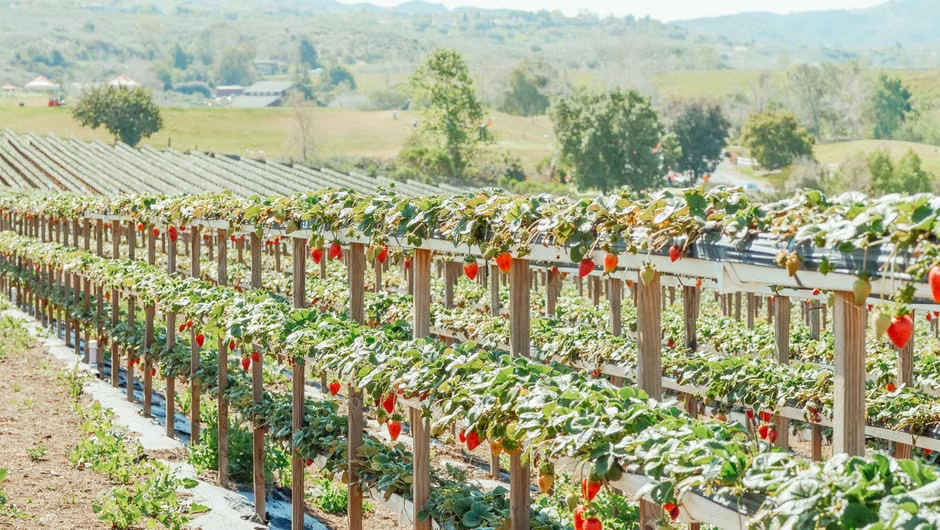
The cost to start an organic farm varies significantly depending on scale, land acquisition, equipment needs, and initial crop choices. Small-scale market gardens might begin with a few thousand dollars for seeds, soil amendments, and basic tools, while larger operations requiring land purchase, irrigation systems, and machinery could easily incur costs ranging from tens of thousands to over a million dollars. Certification fees also represent an ongoing expense.
Initial investments often include securing appropriate land, which can be purchased or leased. For many, starting small, perhaps on existing land or through a community farming program, reduces initial outlay. Equipment, from hand tools to tractors, forms another major cost. Organic farms often invest in specialized equipment for mechanical weed control or composting. Furthermore, the transition period for land to achieve organic certification status can mean several years of farming organically without the premium prices, which factors into the financial planning. For detailed guidance on the specific requirements and associated costs for organic certification, including the fees for USDA National Organic Program compliance, we recommend exploring our comprehensive Organic Certification Program information.
“Transitioning to organic agriculture often involves significant upfront costs, including land conversion, new equipment, and potential yield reductions during the first few years. However, long-term benefits include premium prices and enhanced soil health.”
What Are 5 Disadvantages of Organic Farming?
While offering numerous benefits, organic farming does present certain challenges. Five common disadvantages include potentially lower yields compared to conventional methods in some initial stages, higher labor costs due to intensive manual practices, increased susceptibility to pests and diseases without synthetic inputs, greater land requirements for equivalent production, and higher overall production costs which can translate to higher consumer prices.
The stringent requirements for organic certification often mean farmers cannot use readily available synthetic pesticides or fertilizers. This necessitates alternative strategies like crop rotation, beneficial insect habitats, and extensive composting, which can be more labor-intensive and require specialized knowledge. For instance, managing weeds organically typically involves mechanical cultivation or hand-weeding, significantly increasing labor hours. Additionally, some organic systems may struggle with certain persistent pests or diseases, leading to crop losses if natural controls aren’t perfectly balanced. Despite these considerations, the long-term benefits for soil health, biodiversity, and the quality of food produced often outweigh these initial challenges. We work with farmers to mitigate these disadvantages by enlivening the land and crops with consciousness-based practices, building resilience from within the ecosystem.
What to Look For: Qualities of Vedic Organic Produce
Produce cultivated under Maharishi Vedic Organic Agriculture principles is understood to possess distinctive qualities that go beyond typical organic standards. When you choose foods grown with this approach, you’ll experience:
- Enhanced Vitality and Flavor: Food grown in harmony with Natural Law is believed to have a heightened life force, contributing to superior taste and vibrancy.
- Highest Purity: Strict organic standards are maintained, ensuring freedom from synthetic pesticides, herbicides, and GMOs, complemented by natural purification processes.
- Nutrient Density: Healthy, enlivened soil, rich in microbial life, contributes to plants that are more efficient at absorbing and concentrating essential nutrients.
- Increased Shelf Life: The inherent balance and vitality of the produce can lead to greater resilience and a longer period of freshness after harvest.
- Positive Environmental Impact: This farming system actively regenerates soil, promotes biodiversity, and supports balanced ecosystems, contributing to planetary health.
- Harmonizing Effect: Consumption of such food is thought to bring a harmonizing influence to the consumer, reflecting the balanced state of nature from which it originated.
Implementing Vedic Principles: How It Works
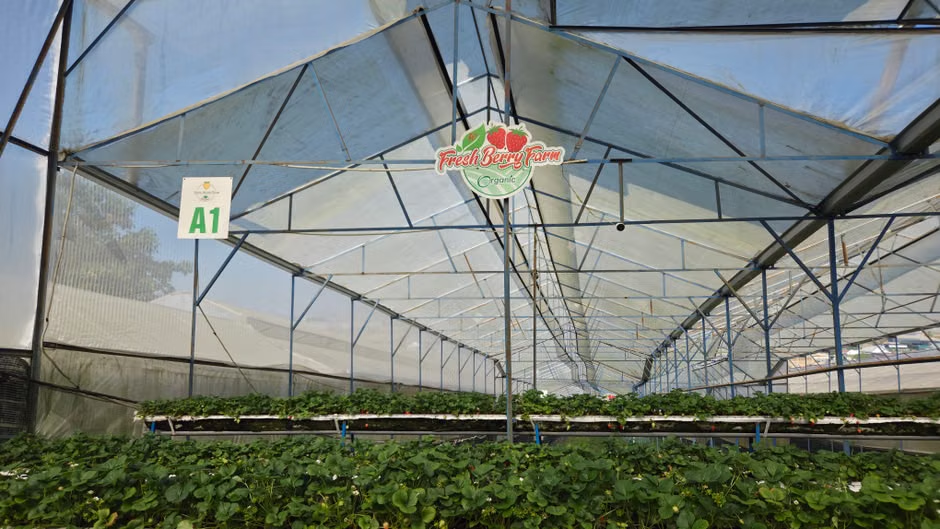
Implementing Maharishi Vedic Organic Agriculture involves a precise, systematic integration of specific practices designed to awaken the innate intelligence within nature. This isn’t merely about avoiding chemicals; it’s about actively enlivening the entire farm ecosystem. The approach uses time-tested Vedic technologies, including the application of specific Vedic sounds (Mantras) and traditional rituals (Yagyas), performed by highly trained experts at auspicious times. These practices are understood to resonate with the subtle levels of Natural Law, promoting coherence and balance in the environment. We have documented over 600 peer-reviewed scientific studies from 200+ universities validating the efficacy of these Vedic technologies in diverse fields, including agriculture.
Beyond these subtler applications, the system emphasizes meticulous attention to practical organic farming aspects: cultivating vibrant soil health through composting and green manures, optimizing water use, and fostering a diverse ecosystem that supports natural pest control. Farmers also learn to align planting and harvesting times with cosmic cycles, utilizing celestial influences to enhance growth and vitality. As Richard Mort, a key figure in MVOAI, often states, “Vedic principles illuminate how to work with the intelligence of nature, not just its physical aspects, leading to truly life-supporting results.” This holistic approach ensures that the food produced is not only free from harmful substances but is also imbued with nature’s full intelligence and life-enhancing qualities, contributing to global sustainability and farmer wellbeing.
Suitability and Alternatives: Beyond Standard Organic
Maharishi Vedic Organic Agriculture offers a profound pathway for farmers committed to producing food of the highest purity and quality, transcending standard organic certification to integrate principles of consciousness and Natural Law. This system is particularly suitable for those who resonate with a holistic worldview and seek to cultivate not just crops, but also a deeper connection with nature’s intelligence. However, it’s also important to acknowledge that not every farm or farmer will immediately adopt this deep integration.
For many, pursuing basic Organic Agriculture certification, such as the USDA National Organic Program, is an excellent and crucial first step. We are a USDA-accredited certifier with decades of experience since our inception in 2000, and our expertise extends to ISO 65 accreditation for certification body competence, along with EU and Japan (JAS) certification credentials. These certifications provide a robust framework for environmentally sound practices and contribute significantly to healthier food systems. While conventional organic methods are highly valuable and are a prerequisite for our Vedic principles, the Vedic approach goes further, aiming to restore the fundamental intelligence that governs all life. For those seeking to explore why Organic Is Not Enough to achieve the highest potential of food, the principles of Vedic agriculture offer a compelling next step, though they complement rather than replace foundational organic practices.
The Harvest of Consciousness: What to Expect
Embracing Maharishi Vedic Organic Agriculture is a commitment to a process that yields transformative results, not instant fixes. Farmers can realistically expect to see a gradual, yet profound, improvement in several areas over several growing seasons. Initially, you’ll observe increased soil vitality and resilience. The enlivened soil structure and microbial activity will enhance nutrient cycling, leading to healthier, more robust plants. We have observed this across our active global certification network in multiple countries.
Over time, the crops themselves will demonstrate greater resistance to pests and diseases, requiring fewer interventions. The produce harvested will exhibit superior taste, aroma, and nutritional density, fulfilling the promise of food that truly nourishes. Beyond the physical yields, farmers often report a heightened sense of wellbeing and harmony in their daily lives, a direct reflection of working in closer alignment with Natural Law. This is a journey of cultivation—of both the land and consciousness—where the fruits of your labor extend far beyond the market value of your crops.
Practical Tips for Starting Your Vedic Organic Farm
Embarking on the journey of Vedic Organic Agriculture requires thoughtful planning and a phased approach. Here are some practical steps to guide you:
- Deepen Your Understanding: Immerse yourself in the principles of Maharishi Vedic Organic Agriculture. Study the foundational texts and scientific validations, understanding the interplay of consciousness and natural processes.
- Assess Your Land: Begin with a thorough analysis of your soil health, water resources, and local ecosystem. This provides a baseline and helps tailor your specific Vedic agricultural practices.
- Start Small, Learn Steadily: Consider dedicating a portion of your farm to Vedic principles initially. This allows you to gain practical experience, observe results, and refine your techniques before scaling up.
- Seek Expert Guidance: Connect with MVOAI. Our expertise as a USDA-accredited certifier with direct experience certifying organic producers and food processors makes us an invaluable resource for education and implementation support.
- Prioritize Soil Health: Implement robust organic soil-building practices from day one. Focus on composting, cover cropping, and minimizing soil disturbance to create a living, enlivened foundation.
- Consider Certification: As you progress, pursuing certification for both standard organic and Maharishi Vedic Organic Agriculture will validate your efforts and open doors to markets that value the highest purity and quality.
The path to establishing a successful Vedic organic farm is a rewarding endeavor, aligning agricultural practice with the profound intelligence of nature itself. It’s a commitment to creating life-supporting food, fostering ecological balance, and elevating the consciousness of both the farmer and the consumer. By embracing these principles, you contribute to a global movement towards a healthier, more harmonious world, cultivating not just crops, but a deeper connection to the Unified Field of Natural Law. We invite you to explore this transformative approach further and join us in bringing forth food that embodies the highest purity and quality.