

In a world increasingly aware of the origins and impact of our food, the term ‘organic’ often serves as a baseline for quality. Yet, for many, a deeper understanding of what truly constitutes life-supporting cultivation remains elusive. Consumers diligently seek out organic groceries, organic foods, and even specific items like organic baby formula, trusting that these choices align with healthier living and environmental stewardship.
But what if there’s a standard beyond conventional organic certification, one that integrates ancient wisdom with modern science to elevate food quality, farmer well-being, and ecological balance? We believe food is more than chemical composition; it is a manifestation of nature intelligence. Understanding this distinction is key to making informed choices that resonate with a fundamental link between man and nature.
At the Maharishi Vedic Organic Agricultural Institute (MVOAI), we’re committed to reestablishing the peace between farming, consciousness, and the Laws of Nature. Our mission extends beyond mere compliance, offering a premium Vedic standard that enlivens food with the highest purity and quality. To truly understand our approach, one must first grasp the foundational principles of organic certification itself, which we proudly facilitate through our Organic Certification Program, ensuring rigorous adherence to both national and international standards.
What are the standards for organic certification?
Organic certification ensures agricultural products are produced using methods that preserve natural resources, conserve biodiversity, and only use approved substances. These standards prohibit synthetic pesticides, herbicides, GMOs, antibiotics, and growth hormones, focusing on ecological balance and sustainability. The process is overseen by accredited certifying agents who verify compliance through regular inspections.
The core of organic certification, particularly under the USDA National Organic Program (NOP), revolves around a defined set of practices and prohibited substances. These regulations are designed to foster cycling of resources, promote ecological balance, and conserve biodiversity. For a product to bear the USDA Organic seal, it must be produced without excluded methods, such as genetic engineering; without prohibited substances, such as most synthetic pesticides and fertilizers; and processed according to specific rules. This commitment reflects a basic respect for the land and the consumers who seek pure products.
As a USDA-accredited certifier, MVOAI has direct experience in the hands-on inspection and accreditation of organic producers and food processors. Our institution has been operating since July 2000, bringing over 26 years of experience to ensuring adherence to these vital standards. We apply the rigor of USDA NOP and other international standards to every certification, guaranteeing the integrity of the organic label.
What does regenerative certified organic mean?
Regenerative certified organic farming goes beyond standard organic practices by actively focusing on improving soil health, sequestering carbon, increasing biodiversity, and enhancing the entire ecosystem. It emphasizes holistic land management to rebuild organic matter and restore degraded soils, creating a truly sustainable and resilient agricultural system.
While traditional organic farming primarily aims to avoid harmful inputs, regenerative organic agriculture seeks to actively heal and revitalize the land. It’s about moving from simply ‘doing no harm’ to ‘doing good’ for the environment. Practices like no-till farming, cover cropping, diverse crop rotations, and managed grazing are central to this approach. These methods build healthy soil, which, in turn, captures carbon from the atmosphere, enhances water retention, and supports a thriving microbial ecosystem. According to Wikipedia, regenerative agriculture, in general, is “a conservation and rehabilitation approach to food and farming systems,” highlighting its focus on revitalizing ecosystems (Wikipedia).
The Maharishi Vedic Organic Agriculture system naturally aligns with and even transcends these regenerative principles. It integrates the profound knowledge of Natural Law with agricultural practices, aiming not only for physical regeneration of the soil but also for the enlivening of consciousness within the entire farming ecosystem. Vedic agriculture recognizes the fundamental link between man and nature, between the individual and the cosmos, and seeks to enhance that relationship.
USDA organic certification requirements
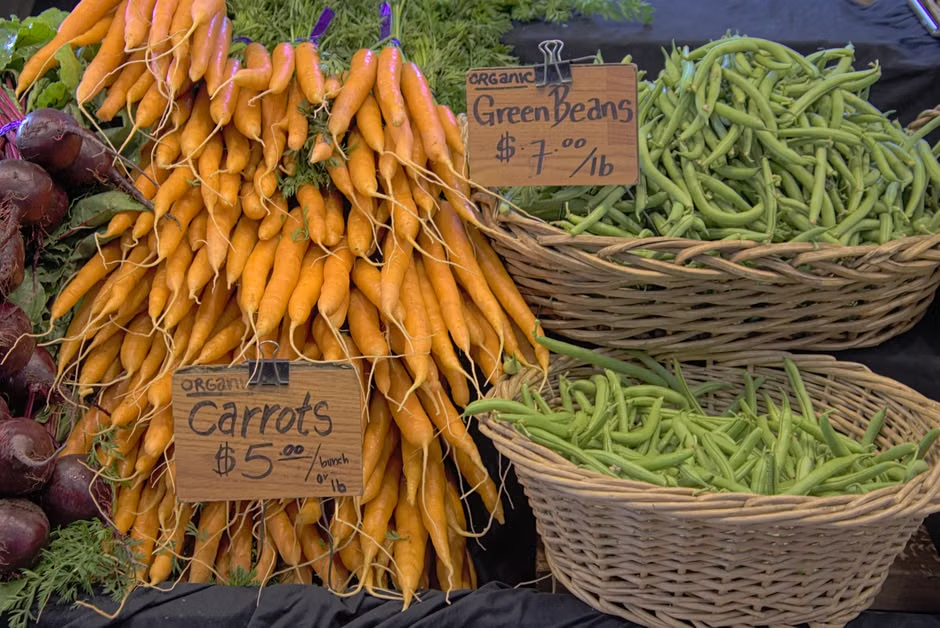
To achieve USDA organic certification, farms and businesses must comply with a strict set of regulations regarding production, handling, and labeling. This includes using organic seeds, avoiding synthetic pesticides and fertilizers, providing outdoor access for livestock, and maintaining detailed records. The entire process is verified annually through inspections by USDA-accredited certifying agents.
The journey to USDA organic certification is a rigorous one, ensuring that every product labeled “organic” truly adheres to federal standards. Key requirements encompass:
- Land History: Land must have had no prohibited substances applied for at least three years prior to harvest.
- Organic System Plan (OSP): Farmers must develop and adhere to a detailed plan outlining all organic practices, from soil fertility management to pest control.
- Approved Substances: Only substances from the National List of Allowed and Prohibited Substances can be used.
- No GMOs: Genetically modified organisms are strictly prohibited at any stage.
- Animal Welfare: Livestock must be raised in conditions that accommodate their natural behavior, including outdoor access, and fed 100% organic feed.
- Record Keeping: Comprehensive records must be maintained, detailing all activities, inputs, and sales.
This meticulous process is critical for maintaining consumer trust and the integrity of the organic label. We have seen firsthand, through our work as an ISO 65 accredited certification body, how vital this detailed adherence is. Our extensive experience includes a global network for certification across multiple countries, affirming our authority and trust in the international organic landscape.
“The USDA organic seal assures consumers that products have been produced according to strict federal standards that address many factors, such as soil quality, animal raising practices, and pest and weed control.”
How does Maharishi Vedic Organic Agriculture enhance these standards?
While USDA organic certification establishes a robust foundation, Maharishi Vedic Organic Agriculture takes these principles to an even higher level, integrating consciousness-based practices with sustainable farming. This system doesn’t merely avoid the negative; it actively cultivates positivity and vitality in the soil, plants, animals, and even the farmer. It’s about enlivening the entire agricultural process by aligning it with Natural Law.
The application of Vedic principles in agriculture involves specific techniques and knowledge drawn from the ancient Vedic tradition. This includes practices like proper timing of planting and harvesting according to cosmic cycles, chanting specific Vedic sounds (Vedic Yagyas), and creating a harmonious environment for growth. The goal is to enhance the intelligence of nature within the farm, leading to food of extraordinary purity and quality, imbued with greater nutritional value and vitality. Our decades of experience demonstrate that this approach delivers food that is not only free from toxins but also structurally more ordered and life-supporting. You can explore more about Vedic Organic principles and their profound impact.
What to look for in truly life-supporting organic foods
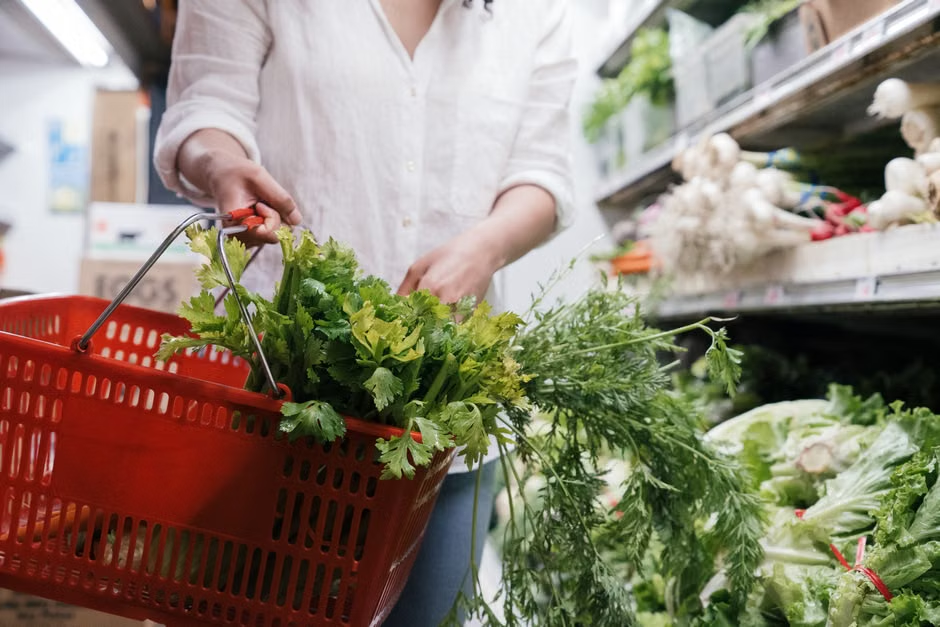
When seeking organic and natural foods for your family, whether it’s organic groceries, organic foods, or even specific items like organic baby formula, knowing what truly indicates premium quality goes beyond a simple label. Look for these signs of truly life-supporting produce:
- Vibrant Appearance and Aroma: Truly vital food often has a richer color, a firmer texture, and a more pronounced natural scent. It smells fresh, alive.
- Exceptional Taste: Food grown in highly enlivened soil tastes better. It’s not just “good,” it’s bursting with its natural flavor profile.
- Durability: High-quality organic produce tends to last longer, a subtle indicator of its inherent strength and vitality.
- Clear Sourcing: Understand where your food comes from. Look for certifications beyond the basic USDA seal, such as the Maharishi Vedic Organic Agriculture label, which signifies an elevated standard.
- Community Connection: Supporting farmers who prioritize ecological and conscious practices often means connecting with smaller, dedicated producers.
- Absence of Additives: Beyond prohibited substances, truly pure food avoids any unnecessary processing aids or artificial components.
We’ve observed that foods cultivated under the Maharishi Vedic Organic Agriculture system consistently demonstrate these elevated qualities. The integration of quantum physics and Natural Law concepts into agriculture manifests as tangible improvements in the food itself.
Navigating alternatives and advanced standards
While USDA Organic certification is a vital step, it’s also important to understand the landscape of agricultural standards and recognize that some systems offer even deeper benefits. For example, some farms are exploring biodynamic certification, which shares similarities with Vedic agriculture in its holistic view of the farm as a living organism and its adherence to cosmic rhythms. These approaches often go beyond the baseline by integrating spiritual and energetic components into farming.
For those interested in the profound benefits of agriculture aligned with Natural Law, MVOAI offers a path to understanding why Organic Is Not Enough. Our perspective is rooted in the extensive body of 600+ peer-reviewed scientific studies from over 200 universities validating Vedic technologies. These studies underscore the measurable improvements in soil health, plant vitality, and even human well-being derived from consciously cultivated food.
By engaging with Maharishi Vedic Agriculture, farmers aren’t just meeting compliance; they’re actively participating in a system that fosters global sustainability and impact, contributing to healthier individuals and communities through food. This is the difference between simply following rules and truly embodying principles.
Practical tips for sourcing and supporting higher standards
For consumers seeking the highest purity and quality in their organic and natural food choices, and for farmers aspiring to elevate their practices, here are some practical tips:
- Look for Advanced Certifications: Beyond the basic organic label, seek out certifications like the Maharishi Vedic Organic Agriculture label, which indicates a commitment to deeper principles.
- Visit Farmers Markets: Engage directly with farmers. Ask about their growing practices, their philosophy, and their commitment to soil health.
- Research Farms and Producers: Learn about the specific farms that supply your favorite organic groceries. Many will share their stories and methods online.
- Prioritize Whole, Unprocessed Foods: The closer food is to its natural state, the more likely it is to retain its inherent vitality, especially if grown consciously.
- Understand Natural Law: Familiarize yourself with the concepts behind Natural Law and its application in agriculture, which is foundational to the Vedic approach. For a deeper dive, explore our section on Veda and Natural Law.
- Support Organizations Committed to Higher Standards: Your purchasing power reinforces the demand for more conscious and regenerative farming practices.
The journey toward truly life-supporting agriculture is continuous, and it requires both informed producers and discerning consumers. By understanding the rigorous standards of organic certification and appreciating the elevated principles of Maharishi Vedic Organic Agriculture, we can collectively move towards a future where food not only nourishes the body but also enlivens consciousness and brings balance to the environment. This profound integration of ancient wisdom and modern scientific validation ensures that the food we eat, whether found at your local organic market or directly from a certified farm, contributes to a healthier, more harmonious world for all.