

For organic farmers and food producers, the path to certification can feel like navigating a dense forest of regulations and standards. A crucial, yet often misunderstood, aspect of this journey is the role of accreditation. It’s not enough for a certifier to simply offer “organic” labels; their own operations must adhere to stringent, internationally recognized benchmarks of competence and impartiality.
Without such oversight, the very integrity of organic claims—and the trust consumers place in them—could erode. This is where standards like ISO 65 accreditation become profoundly significant. They provide an assurance that the certifying body itself operates with the highest level of rigor, ensuring that every product bearing an organic seal truly meets its promise.
At Maharishi Vedic Organic Agriculture Institute (MVOAI), we understand the critical nature of this trust. As a USDA-accredited certifier operating for over 26 years, we uphold these foundational principles, ensuring our global network of certification services provides authentic, life-supporting food. We recognize that farmers seeking organic certification often wonder about the specific requirements, as we explain in our guide on does your farm qualify for organic certification.
What Is ISO 65 Accreditation?
ISO 65 accreditation, now formally ISO/IEC 17065, is an international standard that specifies requirements for bodies certifying products, processes, and services. It provides a framework for how these certifiers must operate to ensure competence, consistency, and impartiality, thereby instilling confidence in the certificates they issue.
This standard isn’t merely a suggestion; it is a vital benchmark for any organization performing certification activities. It assures that the processes followed are fair, objective, and technically sound. When a certification body holds ISO 65 accreditation, it signifies that an independent third party has assessed its operations and confirmed its adherence to these rigorous international criteria. This assessment covers everything from the certifier’s staff qualifications and internal management systems to its audit procedures and decision-making processes, ultimately protecting both producers and consumers by validating the integrity of the certification mark. Without such rigorous standards for the certifiers themselves, the market could be flooded with misleading claims, undermining the very concept of organic assurance.
“Accreditation serves as an objective validation of a certification body’s ability to perform specific certification activities reliably and impartially.”
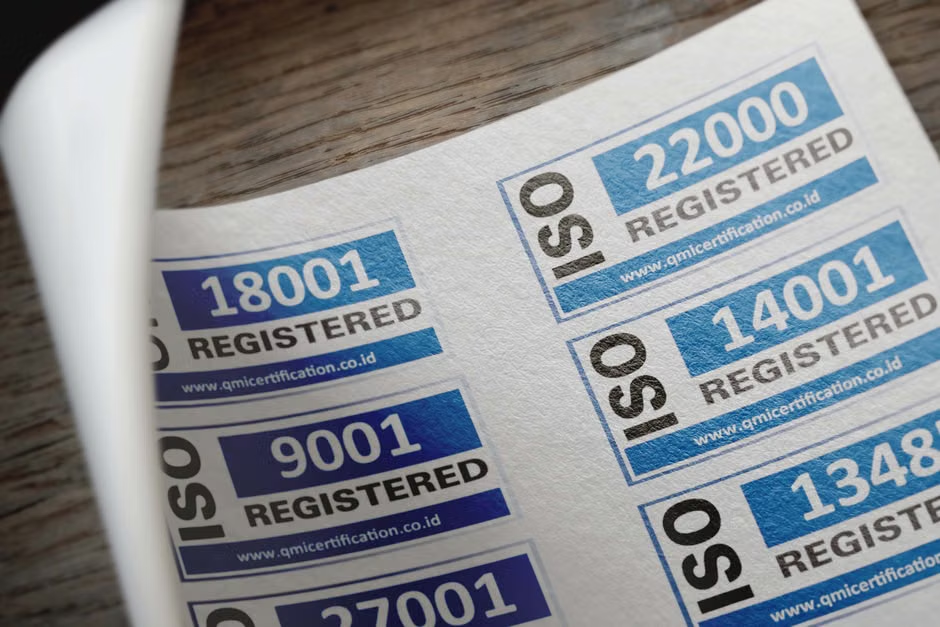
Why Is It Important to Be Sure a Certifying Agency Is Accredited?
Ensuring your certifying agency is accredited guarantees their competence and impartiality, providing a credible foundation for your organic claims. Accreditation verifies that the certifier consistently applies rigorous standards, which protects both producers from unfair evaluations and consumers from misleading product labels.
When an independent body like the USDA National Organic Program accredits MVOAI to ISO 65, it means our systems for evaluating organic compliance have themselves been judged against internationally recognized benchmarks. This process minimizes bias and ensures uniformity in assessment. For organic farmers, choosing an accredited certifier means their hard work in cultivating life-supporting foods, grown in harmony with Natural Law, receives a seal of approval that carries weight and recognition globally. It shields the integrity of the entire organic supply chain.
We’ve found that farmers who understand this distinction are better equipped to choose the right organic certifier for their farm, ultimately leading to a smoother certification experience and greater market trust.
How ISO 65 Accreditation Works to Ensure Trust
The mechanism of ISO 65 accreditation involves a thorough, multi-stage assessment. Initially, a prospective certifier applies to an accreditation body, such as the USDA for organic certification in the U.S. This body then conducts an exhaustive review of the certifier’s documentation, policies, and procedures, ensuring they align with the ISO 65 standard.
Next, on-site assessments are performed. Experienced auditors observe the certifier’s operations, interview staff, and witness actual certification audits in progress. They verify that the certifier’s personnel possess the necessary technical expertise and that their processes are fair and transparent. This hands-on evaluation ensures the certifier’s internal management system effectively controls impartiality, manages conflicts of interest, and maintains consistent, objective decision-making. Accreditation is not a one-time event; it involves regular surveillance and re-assessment to guarantee ongoing compliance, ensuring that trust in the certification mark remains enlivened and robust. Our own direct experience certifying organic producers and food processors across various countries gives us unique insight into these rigorous demands.

What Benefits Does ISO 65 Accreditation Offer?
For organic producers, ISO 65 accreditation brings a wealth of benefits that extend far beyond a mere badge of compliance. It strengthens market position and fosters consumer confidence, which are invaluable assets in today’s competitive food landscape. It provides an assurance of highest purity and quality.
Key benefits include:
- **Enhanced Credibility:** An accredited certification mark is globally recognized, opening doors to international markets and reinforcing the value of your organic products.
- **Risk Reduction:** Accreditation minimizes the risk of product recalls, legal challenges, and damage to brand reputation due to non-compliance.
- **Operational Efficiency:** Certifiers operating under ISO 65 often have streamlined, well-defined processes, leading to more efficient and predictable certification timelines for producers.
- **Fairness and Impartiality:** The standard requires certifiers to operate without bias, ensuring that all applicants are treated equitably and decisions are based purely on objective evidence.
- **Consumer Trust:** Consumers are increasingly discerning. Seeing an organic label backed by an accredited certifier provides peace of mind that their food choices are genuinely life-supporting and in harmony with Natural Law.
- **Regulatory Acceptance:** Many national and international organic programs, like the USDA National Organic Program, require or recognize ISO 65 accreditation for their certifiers, simplifying market access.
“Reliable accreditation helps to ensure the competency of product certifiers, promoting confidence in certified products across various sectors, including food and agriculture.”
Considering Alternatives and Exceptions
While ISO 65 accreditation is the gold standard for product certification bodies, it’s essential to understand that not every certification body necessarily operates under this specific framework, or needs to. For instance, some niche agricultural certifications might be governed by specialized national standards, or operate under direct governmental oversight without an additional layer of ISO 65 accreditation if the government body itself directly performs the certification, as is often the case with certain state-level programs. Small, local certification initiatives might rely on community trust and peer review, which, while valuable, operate on a different scale than the global organic market.
Farmers focused solely on local direct-to-consumer sales might find less pressure for internationally recognized accreditation, though the underlying principles of transparency and adherence to standards remain vital. However, for producers aiming for broader markets, particularly those seeking USDA Organic certification, EU Organic, or Japan (JAS) organic certification, an ISO 65 accredited certifier like MVOAI is not just a preference, but often a regulatory requirement. Our ISO 65 accreditation for certification body competence, alongside our USDA accreditation, ensures we meet these exacting international regulatory standards. We are committed to reestablishing the peace between farming, consciousness, and the Laws of Nature, providing farmers with certifiers who operate with integrity and expertise.
What to Expect When Working with an ISO 65 Accredited Certifier
Engaging with an ISO 65 accredited certifier brings clarity and a predictable framework to your certification journey. You’ll experience a structured process guided by defined procedures and qualified personnel. From your initial application to the final certification decision, expect transparency and clear communication regarding requirements and timelines. Richard Mort, our founding vision behind Maharishi Vedic Organic Agriculture Institute, emphasized the importance of clarity in these processes.
The timeline for certification itself can vary, often ranging from 3 to 9 months depending on your farm’s readiness, the complexity of your operation, and the promptness of your responses to information requests. An accredited certifier will provide a realistic estimate and stick to it, avoiding unnecessary delays. You’ll receive thorough, impartial inspections and clear explanations of any non-conformities, with guidance on corrective actions. The entire experience is designed to be fair, minimizing ambiguity and building confidence in the integrity of the organic status you achieve. For farmers wondering about the financial aspects, we also have resources discussing USDA organic certification costs, which can help in planning.
Practical Steps for Farmers
Navigating the certification landscape requires diligence. Here are practical steps to ensure you’re working with a certifier whose accreditation guarantees the highest standards:
- **Verify Accreditation Status:** Always confirm that your chosen certifier is accredited by a recognized authority (e.g., USDA National Organic Program for organic certification in the US). Look for official logos and documentation.
- **Ask About ISO 65:** Specifically inquire if they hold ISO 65 (now ISO/IEC 17065) accreditation and ask for evidence. This demonstrates their commitment to international standards of competence and impartiality.
- **Review Their Scope of Accreditation:** Ensure the certifier’s accreditation covers the specific product, process, or service you are seeking to certify. For organic agriculture, this means they must be accredited for crop, livestock, or processing operations relevant to your business.
- **Understand the Certification Process:** A reputable, accredited certifier will clearly outline their entire certification process, including application, inspection, and decision-making steps, as well as the fees involved.
- **Check for Transparency:** Look for certifiers who are open about their procedures and decision-making criteria. Transparency is a hallmark of an accredited body.
- **Seek References:** Speak to other farmers or producers who have worked with the certifier. Their experiences can provide valuable insights into the certifier’s professionalism and efficiency.
Choosing an ISO 65 accredited certifier is a fundamental decision that impacts not only your farm’s market access but also the inherent value and trust placed in your organic products. It assures that your dedication to cultivating high-quality, consciousness-based agriculture, in alignment with Natural Law, is recognized and respected globally. This commitment to stringent standards, coupled with our deep understanding of Vedic principle-based agriculture, ensures that MVOAI continues to support farmers in producing food of the highest purity and quality, enlivening global sustainability and community wellbeing for generations to come.