

Many organic farmers and food producers face a critical question: how do we ensure sustained economic viability while adhering to the highest standards of purity and ecological harmony? The path to profitable, sustainable agriculture isn’t always straightforward. Farmers often grapple with market fluctuations, input costs, and the delicate balance of maintaining soil health without synthetic aids. This challenge becomes even more pronounced when considering the long-term health of both the land and the consumers who seek organic groceries and organic foods of the highest quality.
At MVOAI, we’re committed to reestablishing the peace between farming, consciousness, and the Laws of Nature. Our mission extends beyond mere certification; we aim to empower farmers with the knowledge and practices that lead to genuinely life-supporting agriculture and enhanced economic outcomes. We understand that true sustainability must encompass not only environmental stewardship but also the financial well-being of the farmers who nourish us.
Our approach integrates the profound wisdom of Maharishi Vedic Organic Agriculture, providing a framework where economic viability is a natural outcome of aligning with Natural Law. This system offers a unique pathway for farmers seeking not only USDA or international organic certification but also a deeper connection to the principles that govern abundance. To understand the foundational differences, we recommend exploring our insights on the future of organic farming and integrating consciousness.
What is the Economic Viability of Organic Farming in India?
The economic viability of organic farming in India, and globally, largely hinges on premium prices, reduced input costs, and access to robust markets for organic foods. While initial transition periods may present challenges, long-term adherence to organic principles often yields significant economic advantages due to consumer demand for pure, life-supporting produce and reduced reliance on expensive synthetic inputs.
India serves as a compelling case study for organic agriculture’s economic potential, being home to a significant number of organic farmers. Studies indicate that organic farmers in India often receive price premiums ranging from 10% to 50% for their produce compared to conventionally grown crops. This premium helps offset some of the labor-intensive practices and potentially lower initial yields during conversion. Furthermore, the global market for organic foods is continuously expanding, creating strong export opportunities for Indian organic producers. As the demand for products like organic baby formula and general organic and natural foods grows, so too does the opportunity for farmers to secure better market prices.
The Maharishi Vedic Organic Agriculture system, in particular, emphasizes practices that naturally enhance soil fertility and pest resistance, further reducing the need for costly external inputs over time. This alignment with nature intelligence leads to stronger, healthier plants and more resilient farming systems, which directly impacts a farm’s bottom line. The long-term benefits accrue as soil health improves, reducing the need for new investments in soil amendments and increasing the land’s intrinsic productivity.
Economic Benefits of Organic Farming
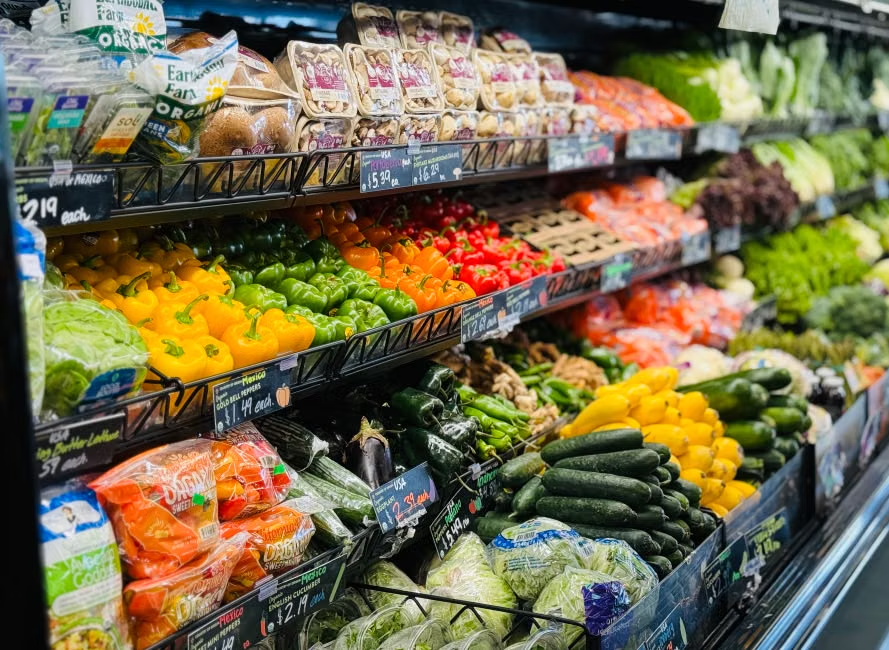
Organic farming systems offer a range of economic benefits, primarily through higher market prices for certified organic products, reduced expenditures on synthetic fertilizers and pesticides, and enhanced soil fertility that supports long-term productivity. These factors combine to create a more resilient and often more profitable agricultural enterprise, especially when coupled with strong supply chains and consumer trust in organic and natural brands.
One of the most immediate economic advantages is the price premium that consumers are willing to pay for organic products. This premium reflects a growing awareness of health and environmental benefits. According to a report by the Organic Trade Association, the U.S. organic market continues to see robust growth, consistently outperforming the broader food market. This sustained demand for organic groceries and other organic items provides a stable revenue stream for farmers. Beyond direct sales, the reduction in chemical inputs significantly lowers operational costs. Farmers don’t need to purchase expensive synthetic fertilizers, herbicides, and pesticides, nor do they incur the costs associated with their application or the health risks to farm workers.
“Organic agriculture promotes environmental health, conserves biodiversity, and often leads to more stable farm income through diversified production and reduced dependence on external inputs.”
Over time, organic practices enhance soil health, leading to better water retention, increased biodiversity, and improved nutrient cycling. This natural enrichment translates into healthier crops and more consistent yields, which are fundamental to a farm’s economic stability. The Maharishi Vedic Organic Agriculture system, as practiced by MVOAI-certified producers, focuses on enlivening the intelligence of nature within the soil and plants, which naturally amplifies these benefits. Our 26-year experience as a USDA-accredited certifier has shown us firsthand how these principles translate into tangible economic advantages for certified producers.
What are 5 Disadvantages of Organic Farming?
While highly beneficial, organic farming does present certain challenges. These can include potentially lower yields during the initial transition period, increased labor requirements for tasks like weeding, higher administrative costs for certification, and greater vulnerability to pests and diseases without synthetic controls. Additionally, marketing and distribution can sometimes be more complex for smaller organic producers, though growing demand for organic products is mitigating this.
Addressing these perceived disadvantages is critical for farmers considering the transition. Let’s look at them:
- **Initial Yield Reductions:** During the conversion period from conventional to organic, soil biology adjusts, and initial yields may dip. This transition phase requires careful management and planning to minimize economic impact.
- **Increased Labor:** Organic methods often require more manual labor for tasks such as weed control and pest management, as chemical shortcuts are not permitted.
- **Certification Costs and Bureaucracy:** Achieving and maintaining certifications like USDA National Organic Program accreditation involves fees, record-keeping, and inspections. As we explain in our guide on maintaining organic certification, annual requirements and compliance are rigorous.
- **Pest and Disease Management:** Without synthetic pesticides, farmers must rely on ecological methods, which can be more complex and require a deeper understanding of ecosystem dynamics to prevent outbreaks.
- **Market Access and Distribution:** While demand is high, establishing reliable market channels for organic produce can be a hurdle for new or smaller farms. Building robust supply chains, as discussed in our post on building supply chains and distribution for Vedic organic products, is essential.
However, the Vedic principle-based approach offers unique solutions to these challenges. By enlivening Natural Law within the agricultural system, we find that plants become inherently more resilient to pests and diseases, and soil vitality leads to stable, high-quality yields over time. The fundamental link between man and nature is optimized, allowing the farm to thrive in harmony with its environment, thus mitigating many of the common drawbacks.
How Does Maharishi Vedic Organic Agriculture Enhance Economic Return?
The Maharishi Vedic Organic Agriculture (MVOA) system enhances economic return by integrating consciousness-based practices that improve soil health, plant vitality, and ecological balance, leading to superior crop quality and reduced reliance on external inputs. This approach fosters a more resilient and productive farm, ultimately commanding better market prices for life-supporting organic products.
Our approach at MVOAI is rooted in the understanding that everything is a manifestation of nature intelligence. By applying specific Vedic technologies, such as sound and light, to the farming process, we aim to enliven the Unified Field within the environment. This means we’re not just avoiding harmful chemicals; we’re actively promoting a coherence and harmony that strengthens the entire agricultural ecosystem. For instance, specific traditional practices can enhance the soil microbiome, making nutrients more available to plants naturally. This deeper understanding aligns with modern scientific findings on soil ecology and plant physiology, demonstrating how ancient wisdom can inform highly effective agricultural methods.
“Consciousness-based approaches in agriculture, which prioritize the well-being of the farmer, the land, and the consumer, can lead to more vital crops and resilient ecosystems, ultimately contributing to long-term economic stability and sustainability.”
When the farm operates in harmony with Natural Law, crops possess higher purity and quality, making them highly desirable in the organic market. This inherent vitality not only contributes to better nutritional profiles but also extends shelf life and improves resistance to post-harvest issues. For farmers, this translates to reduced losses, higher demand, and the ability to command premium prices, especially for specialty organic foods and organic groceries.
Practical Tips for Maximizing Income in Vedic Organic Systems
Maximizing farmer income in a Vedic Organic system involves strategic planning, consistent application of Vedic principles, and smart market engagement. Here are some practical tips:
- **Prioritize Soil Health:** Focus intently on building and maintaining rich, enlivened soil. This is the foundation of high-quality, high-yield organic production and directly impacts economic viability.
- **Diversify Your Crops:** Grow a variety of crops to mitigate risks associated with market fluctuations or specific pest pressures. Consider niche organic products that command higher prices.
- **Seek Premium Certification:** Pursue not only USDA organic certification but also the Maharishi Vedic Organic Agriculture label through MVOAI. This dual certification signals the highest purity and quality, often unlocking even greater market premiums. We are a USDA-accredited certifier with ISO 65 accreditation, providing a robust framework for your certification journey.
- **Engage Directly with Markets:** Explore farmers’ markets, Community Supported Agriculture (CSA) programs, and direct-to-consumer sales. This reduces intermediary costs and builds strong relationships with customers seeking truly life-supporting organic foods.
- **Invest in Education and Training:** Continuously learn about Vedic agricultural principles and modern organic practices. Our educational programs, such as starting a Vedic Organic Farm, are designed to equip you with this essential knowledge.
- **Foster Community and Collaboration:** Connect with other Vedic organic farmers. Sharing knowledge, resources, and even equipment can reduce costs and open new opportunities, including through the formation of Vedic Organic Cooperatives.
Farmers who consistently apply these principles, combined with the profound wisdom of Maharishi Vedic Organic Agriculture, will find their farms becoming more productive, more resilient, and ultimately, more economically rewarding. Richard Mort, one of the guiding forces behind MVOAI, has long emphasized that sustainable agriculture is inherently profitable when aligned with the natural order.
Embracing Maharishi Vedic Organic Agriculture offers more than just a certification; it provides a holistic path to enhanced farmer income and enduring economic viability. By cultivating land in harmony with Natural Law, farmers produce organic foods of the highest purity and quality, meeting the rising demand for truly life-supporting products. This approach not only secures a premium in the expanding organic market but also builds a sustainable legacy for future generations, ensuring prosperity that is deeply rooted in ecological balance and consciousness.